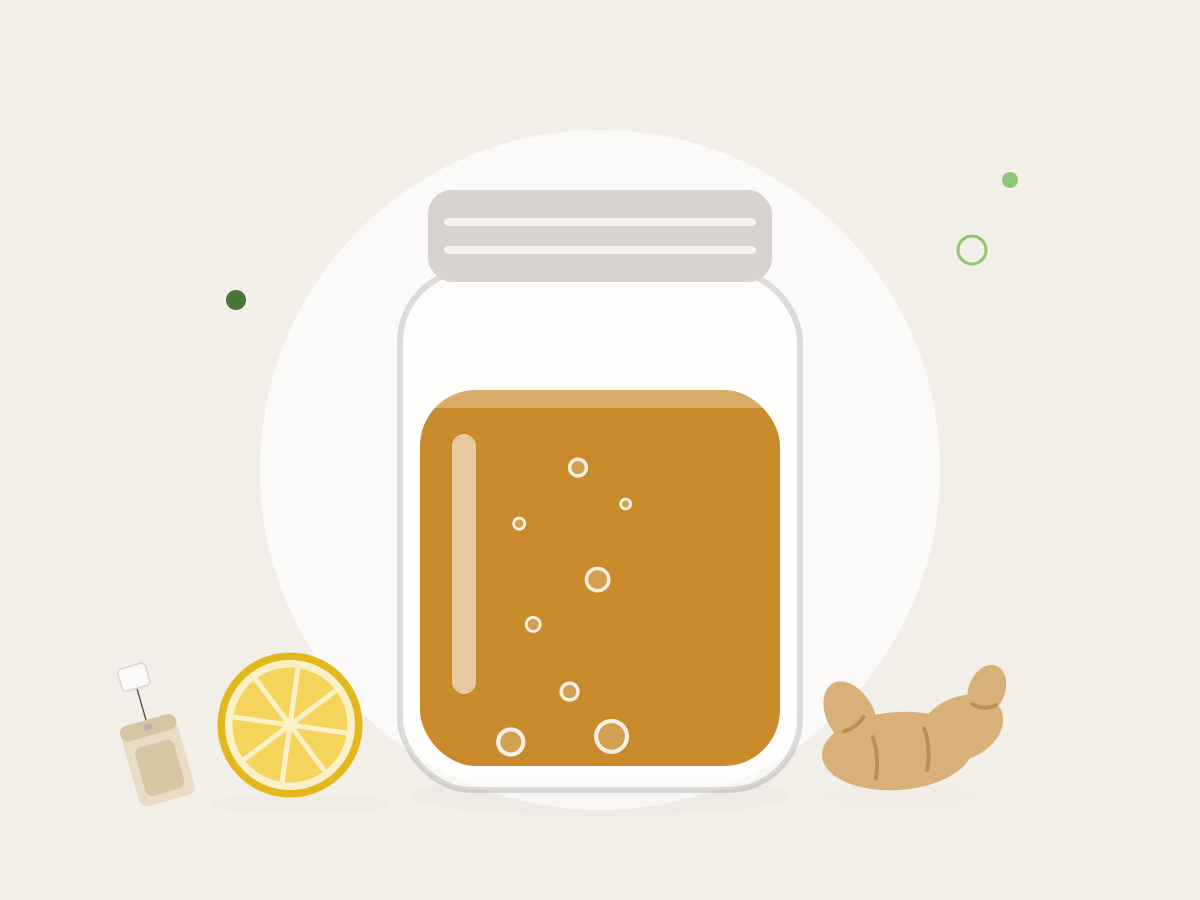
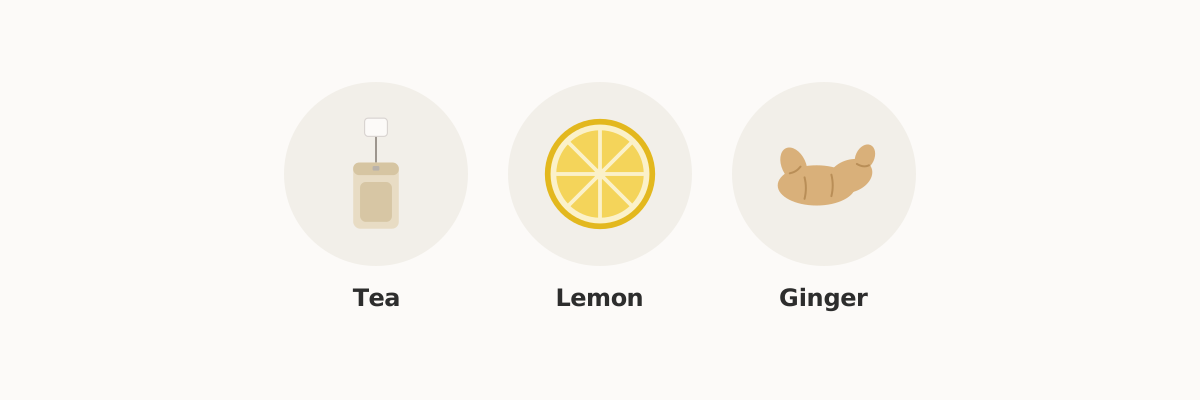
Making kombucha is slow, a bit odd and oddly satisfying. You brew sweet tea, add a culture and wait a week while jars on your counter slowly turn into something tart and lightly fizzy. For many people quitting soda, it’s the project that makes a swap feel like a hobby instead of a sacrifice.
This kombucha recipe is a plain first batch with the safety checks built into the steps. Read the safety section before you start. Home fermentation is easy to do and easy to do badly.
Quick answer: Brew sweet black or green tea, cool it, add starter tea and a SCOBY, cover with tight-weave cloth and ferment 7 to 10 days at 72 to 84°F. The pH should fall below 4.2. If you see mold, or it hasn’t soured in a week, throw the batch out.
Ingredients
- 14 cups water (3.3 L), divided
- 8 black or green tea bags, plain (about 2 tbsp loose tea)
- 1 cup white sugar (200 g)
- 2 cups starter tea (480 ml): unflavored kombucha from a previous batch, or from a bottle
- 1 SCOBY (the rubbery disc of bacteria and yeast)
- 1 gallon (3.8 L) glass jar
- Tight-weave cloth or coffee filter, rubber band
- pH strips or a pH meter
A kombucha starter kit from a brewing shop bundles most of this. If a friend gives you a SCOBY, ask for starter tea too.
Why the sugar? The culture eats it. Some is converted into the acids and fizz that make kombucha what it is, which is why you can’t leave it out.
How to make kombucha
- Wash your hands, the jar and all utensils, and rinse well.
- Boil 4 cups of the water, take it off the heat, stir in the sugar and steep the tea bags for 10 minutes. Remove them.
- Add the remaining 10 cups of cool water. Make sure it’s at room temperature, below about 85°F (29°C), before it meets the culture.
- Pour into the jar, add the starter tea, then slide in the SCOBY.
- Cover with the tight-weave cloth and a rubber band. Colorado State University says not to use cheesecloth: the holes are too big to stop insects and airborne contaminants.
- Ferment at 72 to 84°F (22 to 29°C), out of direct light, for 7 to 10 days. Don’t stir.
- Test the pH from about day 5. Colorado State puts safe finished kombucha at below 4.2 but not lower than 2.5.
- When it tastes tart enough, save 2 cups as your next starter and bottle the rest.
Home kombucha safety basics
This is the part to take seriously.
- Clean everything. Hands, jar, spoons. Use glass, plastic or stainless steel vessels, as Colorado State lists.
- Skip glazed earthenware. UGA Extension warns it can leach heavy metals in an acidic brew.
- Starter tea matters. It lowers the pH early, which makes it harder for unwanted microbes to take hold.
- Plain tea only. Herbal and flavored teas aren’t recommended for the SCOBY.
- Watch the pH. It should drop from about 5 to 4.2 within seven days. If it doesn’t, Colorado State says that points to a contaminated culture or a fermentation temperature that’s too low.
- Mold means start over. Discard the SCOBY and all liquid, and sanitize the vessel before you reuse it. University of Georgia Extension adds that mold can still grow when the brew isn’t acidic enough, and that fuzzy patches mean it’s spoiled.
- Who should check with a doctor. According to Colorado State, kombucha is not advised for people with weakened immune systems, pregnant or lactating women, young children, or people with existing health conditions.
- Start small. The same source suggests new drinkers have no more than about 4 ounces a day, with plenty of water.
Caffeine and alcohol
Kombucha is made from tea, so it contains caffeine. Colorado State calls it small amounts per 8 ounces, but a home batch isn’t measured. It also contains some alcohol as a natural product of fermentation. Commercial products range from under 0.5% to around 3% by volume, per the same source, and UGA Extension says home brews can exceed the 0.5% limit for non-alcoholic drinks, and that people who are told to avoid alcohol should factor that in.
Flavor swaps
Flavor after the first fermentation, never in the main jar.
- Lemon ginger kombucha: To each 16-oz bottle add 1 tbsp grated ginger and 1 tbsp lemon juice. Seal, leave at room temperature 1 to 3 days, then refrigerate. Open slowly: it can be very fizzy.
- Berry: 2 tbsp mashed raspberries per bottle.
- Gingerbread (holiday): a cinnamon stick and a thin slice of ginger in the bottle.
How kombucha replaces your can of soda
It’s the closest homemade drink to soda in how it feels: cold, a bit sharp, a little fizzy if you bottle it, and it comes in a bottle you can twist open. It also has that “I’m having a proper drink” ritual that plain water doesn’t.
Be realistic about the sweetness: some sugar remains, and kombucha is a project, not a quick swap. Treat it as the weekend drink, and keep faster swaps like seltzer with lime for weekdays.
Log it in FizzFree
A drink that takes a week to make needs a record of whether it’s working. In FizzFree, add your kombucha to your Swap Shelf and tap whether the swap worked each time you reach for a bottle instead of a can.
FizzFree is a habit tracker and not medical advice. If you have a health condition or take medication, talk to your doctor before changing what you drink.
Questions
How long does it take to make kombucha?
The first fermentation takes 7 to 10 days at 72 to 84°F (22 to 29°C), according to Colorado State University. Cooler rooms take longer. Taste it from about day 5 and stop when it's tart enough for you and the pH is below 4.2.
Does homemade kombucha have caffeine?
Yes. It's made from real tea, so plain kombucha contains some caffeine. Colorado State describes it as small amounts per 8 ounces. The exact level depends on the tea and the brew, so treat it as a caffeinated drink.
Can I use herbal or flavored tea for kombucha?
Not for the main brew. Colorado State advises against herbal and flavored teas because they aren't recommended for the health of the SCOBY. Use plain black or green tea, and add flavor afterward, such as ginger or lemon in the bottle.
Is homemade kombucha alcohol-free?
Not necessarily. Colorado State notes commercial kombucha can range from under 0.5% to 3% alcohol by volume. Home batches aren't tested, so don't assume it's alcohol-free if you need to avoid alcohol.
Who should check with a doctor before drinking kombucha?
Colorado State says kombucha isn't advised for people with a weakened immune system, pregnant or lactating women, young children or people with existing health conditions. If any of that applies, ask your doctor first. Everyone else can start small.
FizzFree is a habit tracker and not medical advice. If you have a health condition or take medication, talk to your doctor before changing what you drink.