
Ask ten people what to drink instead of soda and nine will say “water.” They’re right, and it’s also the advice that’s failed most people for years. Water is the correct answer to a question you weren’t asking at 3 pm with a vending machine in sight.
So this guide to healthy soda alternatives starts from a different place: the moment, not the drink. What is the can doing for you, and what could do that job instead?
Quick answer: The healthiest substitute for soda is water, according to Harvard’s Nutrition Source, with unsweetened coffee or tea, sparkling water and water flavored with citrus or herbs as practical options. The best one is whichever you’ll actually use at the moment you’d normally open a can.
Key takeaways
- Harvard names water as the top choice and advises avoiding sugary drinks; coffee and tea without added sweeteners are also on its healthy list.
- If you miss the fizz, sparkling water or seltzer is the closest swap. Read the label for added sugar.
- Diet soda is a short-term step, not a destination, according to Harvard and the CDC.
- Match the swap to the moment: heat, thirst, energy, flavor or a hand-full habit each need something different.
Why bother replacing soda at all?
A fair question, and the numbers are the short answer. Harvard’s Nutrition Source says a typical 20-ounce sugar-sweetened soda, lemonade or iced tea contains about 65 grams of added sugar, and describes a typical can as the equivalent of 7 to 10 teaspoons. The FDA’s Daily Value for added sugars is 50 grams. So one large bottle can overshoot the whole day’s reference amount in one sitting.
That’s the case for a swap, and it’s the only case this post makes. It isn’t a promise about weight or any health outcome. It’s arithmetic about sugar, which you can check on any label.
What are the best soda substitutes?
Here’s the shelf, using what Harvard’s Nutrition Source and the CDC actually recommend.
 A ladder of options based on guidance from Harvard’s Nutrition Source and the CDC. Move down as far as suits you; each step is progress.
Water. Harvard puts water first. The CDC adds a practical point: water has no calories, so replacing sugary drinks with plain water can help reduce calorie intake. Its tips for making it appealing are simple: a wedge of lime or lemon, or water frozen in bottles so it stays cold all day.
Sparkling water and seltzer. The CDC lists sparkling water, seltzers and flavored waters as low-calorie choices. Harvard says naturally flavored sparkling water works if plain is too bland. We go deeper on what to look for in healthiest sparkling water.
Unsweetened tea and coffee. Harvard calls coffee and tea without added sweeteners healthy choices. Both usually contain caffeine (caffeine-free versions exist), so if caffeine is part of what you’re cutting, our post on caffeine withdrawal symptoms covers what to expect.
Flavored water, done at home. Harvard suggests water with a splash of juice, sliced citrus or fresh herbs, and home-brewed iced tea such as sparkling iced tea with lemon, cucumber and mint. You control the sugar.
Milk. Harvard’s guidance mentions one to two servings a day of milk or dairy.
Juice, sparingly. Harvard says to limit juice to one small glass a day. It’s not a daily soda replacement.
The CDC also lists what not to swap in: regular sodas, fruit drinks, sports drinks, energy drinks, sweetened waters, and sweetened coffee and tea, which it describes as containing calories but little nutritional value. That’s worth a second glance if your “healthy” swap comes in a bottle with a cartoon fruit on it.
What’s a healthy substitute for diet soda or Diet Coke?
This is the question hiding inside many searches for a “healthy diet soda.” There isn’t one, exactly. Diet soda is the healthier option compared with sugary soda, not compared with water.
Harvard’s Nutrition Source says diet drinks are “a possible short-term substitute, best used in small amounts over a short period of time,” and quotes an AHA/ADA advisory describing them as a useful temporary replacement strategy for sugary drinks. The CDC says labelled “diet” drinks usually contain high-intensity sweeteners and that their long-term effect on weight management is uncertain. WHO’s 2023 guideline recommends against using non-sugar sweeteners to control body weight or reduce disease risk, rates the recommendation as conditional, and excludes people with diabetes. Its suggestion is to choose unsweetened foods and drinks and reduce sweetness overall.
So a healthy substitute for diet Coke is one step further down the ladder: sparkling water with citrus, or unsweetened iced tea. If you want a close look at stepping away from diet drinks, read how to quit diet soda.
How do I match a swap to the moment?
Here’s the thing most lists miss. People don’t drink soda because they’re thirsty. They drink it at a certain time, in a certain place, in a certain mood. A swap that ignores the moment fails.
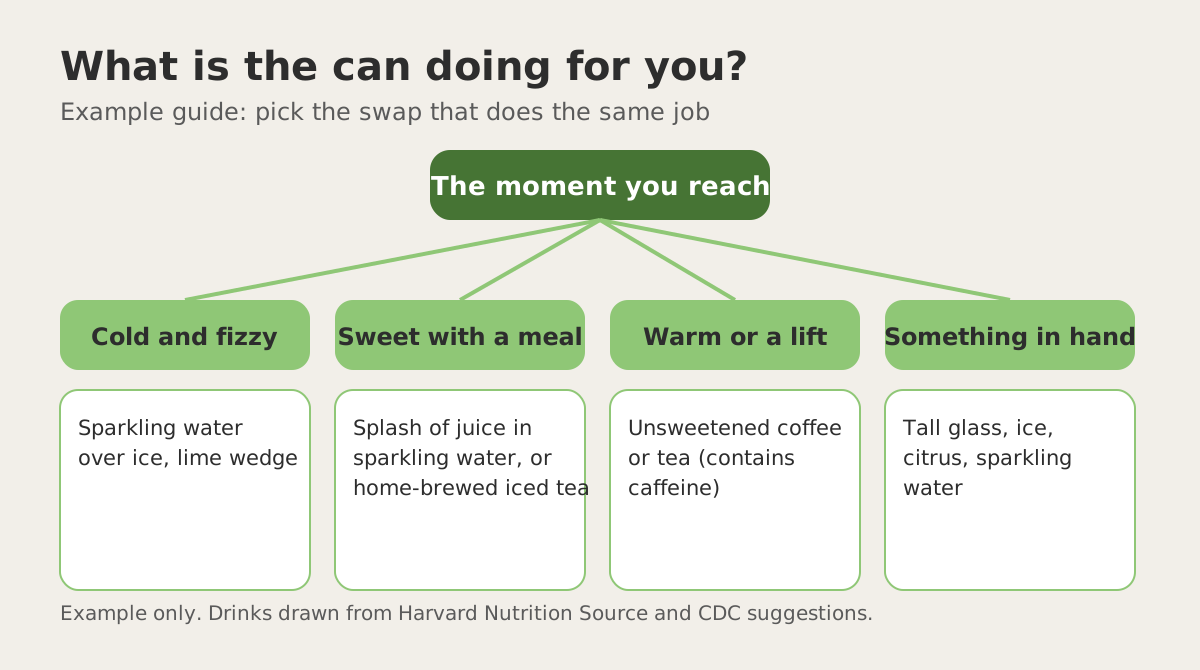 Example matching guide. The drinks named are suggestions drawn from the sources above, not a prescription.
| What the can does for you | A swap that does the same job |
|---|---|
| Cold, fizzy hit in the afternoon | Sparkling water over ice with a lime wedge |
| Sweet flavor with a meal | Sparkling water with a splash of juice, or home-brewed sparkling iced tea with lemon |
| Something warm or a caffeine kick | Unsweetened coffee or tea, mindful of the caffeine |
| Something to hold at a party or game | A tall glass of ice, citrus and sparkling water, so your hand isn’t empty |
| Plain thirst | Cold water, ideally in a bottle you can see |
Where you live changes the answer. In the US South, unsweet or half-sweet tea is the natural swap; in the Northeast, seltzer is easy to find. Pick what’s easy to get.
How do I make a soda swap stick?
A few things that tend to work, in the order I’d try them.
- Stock before you need it. Put the swap in the fridge the day before. The decision at the open door is where plans die.
- Change one moment at a time. Pick your most automatic can, usually lunch or mid-afternoon, and swap that first.
- Taper if stopping feels like a wall. Moving from three cans to two to one can be gentler than zero. The zero sugar soda post lays out an example step-down, and how to quit soda is the complete plan.
- Treat a slip as data. If you drink a can anyway, note which moment it was. That moment needs a better swap, not a bigger guilt trip.
FizzFree was built around exactly this. It’s a quit soda tracker from FizzFree Labs, and its Fizz Map lets you name the moments you reach for a drink and sends a quiet nudge ten minutes before. The Swap Shelf is your own fridge of replacements, like unsweetened iced tea or seltzer with lime, and you tap whether each swap worked. Take a look at how it works.
Do I need to worry about sparkling water and my teeth?
It’s a common concern, so briefly. The American Dental Association’s MouthHealthy page says that “even though sparkling water is slightly more acidic than ordinary water, it’s all just water to your teeth,” and that the two forms of water were about the same in their effects on tooth enamel in the study it cites. The caveats: citrus-flavored waters often have higher acid levels that increase the risk of enamel damage, and sparkling waters with added sugar can no longer be considered just sparkling water. ADA’s advice is to enjoy them in one sitting or with meals, and to drink plenty of regular fluoridated water too.
Frequently asked questions
What is the healthiest drink to replace soda? Harvard’s Nutrition Source names water first, with coffee and tea without added sweeteners also healthy. The best swap is the one you’ll reach for.
Is diet soda a healthy alternative? Lower in sugar, but Harvard calls it a short-term substitute only, and the CDC says long-term effects on weight management are uncertain.
What can I drink if I miss the fizz? Sparkling water or seltzer, which the CDC lists as low-calorie choices. Check the label for added sugar.
Is fruit juice a good soda substitute? Not as a daily swap. Harvard advises limiting juice to one small glass a day.
Do soda alternatives still contain caffeine? Tea and coffee do, and many sodas. Read the label if you’re cutting caffeine.
Sources
- Harvard T.H. Chan Nutrition Source: Sugary Drinks
- Harvard T.H. Chan Nutrition Source: Low-Calorie Sweeteners
- CDC: About Water and Healthier Drinks
- WHO: WHO advises not to use non-sugar sweeteners for weight control (2023)
- FDA: How to understand and use the Nutrition Facts label
- ADA MouthHealthy: The Truth about Sparkling Water and Your Teeth

I'm John Osakwe, founder of FizzFree Labs, the company behind the FizzFree app for quitting or cutting down soda and energy drinks. I also run Etest Tech Hub in Lagos, Nigeria, where we build mobile apps.
FizzFree is a habit tracker and not medical advice. If you have a health condition or take medication, talk to your doctor before changing what you drink.